
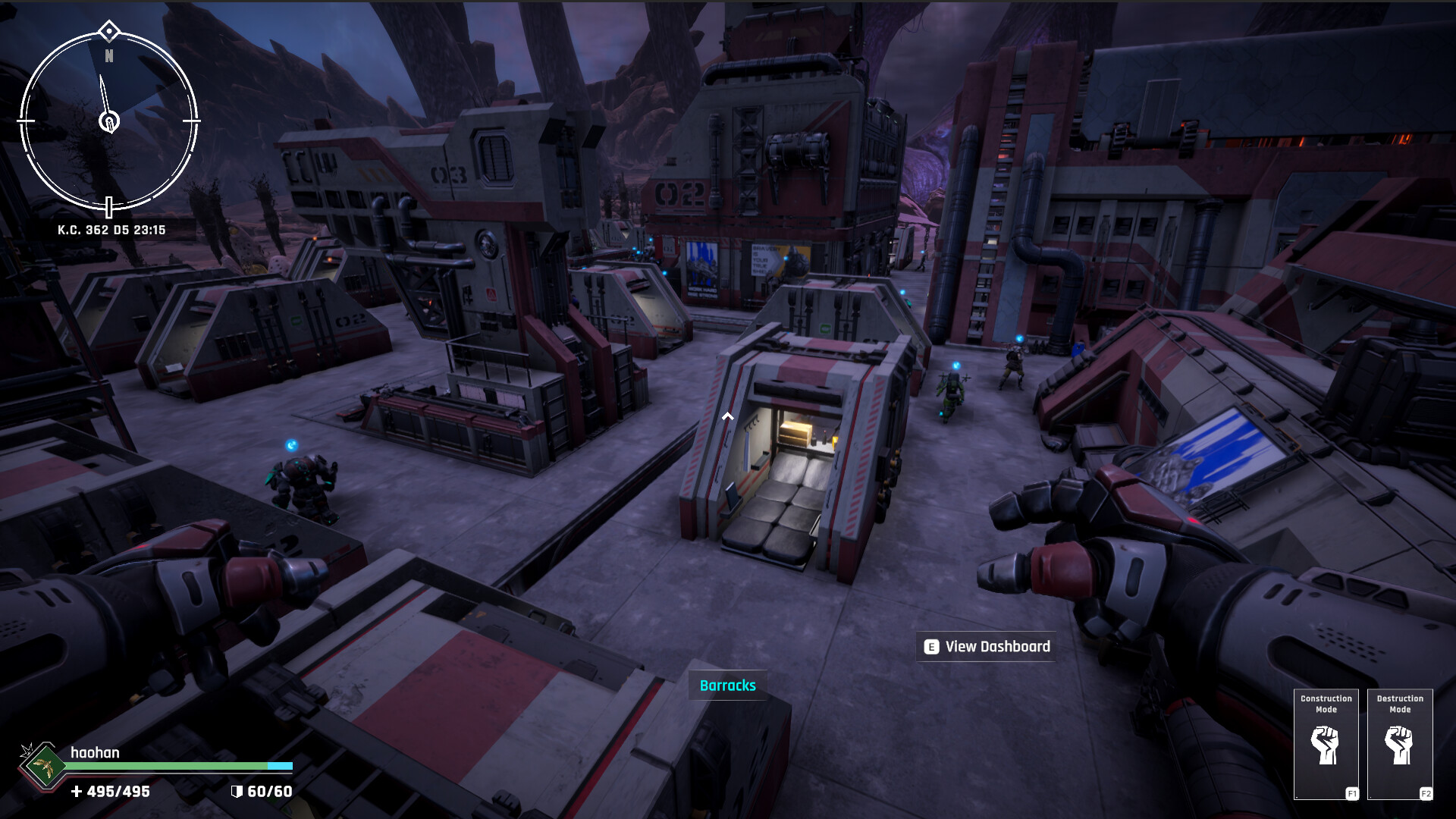
The Pax Autocratica colony management answer is: build a base that keeps working while you are gone. Your colony is not a separate menu from combat; it produces the soldiers, food, resources, research, prisons, weapons, and transport systems that make expeditions possible. If a run succeeds but the base falls behind, the colony plan was not actually working.
The Core Loop
Pax Autocratica alternates between managing a settlement and leaving for first-person expeditions. The settlement gives you resources, soldiers, infrastructure, equipment, and research. Expeditions bring back resources, recruits, Core Fragments, trade opportunities, and progress that feeds the next round of construction.
That loop is why colony management should be judged after you return, not only while you are standing inside the base. A production chain that only works because the Leader keeps touching every step is fragile. A better chain keeps moving while the Leader, medics, and selected soldiers are off-world.
Assign Workers Before Expanding
The developer tips say soldiers should keep basic jobs such as gathering, mining, and logging assigned. They can temporarily leave those jobs to handle other work and then return, so the assignment becomes a productive default. Without those assignments, resource production can slow down unexpectedly.
Use work locks and job filters once the workforce grows. Lock important specialists to jobs they perform well and disable poor-fit categories for soldiers who waste time in them. This is especially important because soldiers and workers are interchangeable in many parts of the loop, so a combat choice can quietly become a production choice.
Research And First Buildings
The Command Center is described as the place where building technologies are researched. Gameplay footage and tutorial notes show early buildings and systems such as barracks, food hall, prison, warehouse, resource transport, shipyard, and weapon research. Exact costs, build limits, and best layout rules are not officially confirmed yet.
Tactical Bureau is still a strong early research target because it affects both sides of the game. It gives combat abilities, increases Core Fragment slots, and unlocks mobility options like flying, hovering, and double jumping. In a first-person colony, mobility is also a management upgrade because it reduces the time spent crossing a growing base.
Automate Resource Transport
The Resource Transport Station is one of the most important automation buildings in the developer tips. Assigned soldiers can collect resources on the ground and directly from Greenhouses, Animal Farms, Deep Drill Towers, and Wood Harvest Plants. They then transport those resources back to the Warehouse Center.
This prevents production from stalling because resources exist but were never moved into storage. It also reduces the Leader's manual hauling burden before and after expeditions. If you are constantly returning to a messy base full of uncollected resources, the resource transport layer is probably the missing management system.
Use Crafting Modes
After building the Warehouse Center, the developer tips say three production modes unlock. Order Mode produces a specific amount, Stock Mode maintains a target quantity, and Continuous Mode keeps producing whenever resources are available. The key advantage is that these modes do not require you to provide all resources upfront.
These modes matter because a growing colony becomes too busy for manual crafting. Stock Mode is useful for baseline supplies, Order Mode helps with one-time goals, and Continuous Mode fits goods you always need. Exact recipes, output speeds, and best thresholds are not officially confirmed yet.
Plan For Absence
Soldiers who join expeditions stop working inside the base while they are away. Before leaving, check whether the people boarding the ship were essential to food, research, resource hauling, or crafting. The strongest combat squad can be the wrong squad if it removes exactly the workers who keep the base alive.
The Leader's Agenda helps catch this. It shows urgent problems, research and blueprint unlocks, upgrades, production progress, and soldiers who are exhausted, protesting, or close to breakdown. Use it as a launch checklist and a return checklist.
Layout Without Fake Adjacency Rules
Pax Autocratica is a first-person colony sim, so layout affects the time you spend moving through the base. The reliable advice is to group systems you check together and keep early work chains readable. Exact adjacency bonuses, road values, power-line rules, and best grid shapes are not officially confirmed yet in the official and developer sources.
Because those values are not confirmed, do not copy generic base-building layouts from other games. A neat warehouse row may look efficient, but the real question is whether workers and transport systems can actually move resources where they are needed. If a layout makes you cross the base repeatedly to handle food, research, prisons, and transport, it is probably bad even if it looks orderly.
Ship Upgrades Are Colony Decisions
Ship research increases how many soldiers can join expeditions, which sounds like a pure combat upgrade. It is also a colony decision because those extra deployed soldiers stop working at home. A stronger ship can therefore create a stronger squad and a weaker production floor at the same time.
Upgrade the ship when the base can absorb the absence. Food should be prepared, basic gathering jobs should have coverage, and resource transport should not depend on the exact soldiers you are taking. If the upgrade makes you bring everyone important into space, the colony is not ready to benefit from it.
Prisons And Population
Pax Autocratica does not rely only on standard recruitment. Weakened enemies can be captured with Capture Rounds, brought back to prison, and eventually converted into new labor or soldiers. Prison capacity, food, and conversion timing therefore become colony management issues, not only combat trophies.
Developer tips also say choices such as rewards, punishments, policies, imprisonment, and executions can affect connected citizens through friends, rivals, family members, lovers, and sometimes the entire colony. Exact thresholds are not officially confirmed yet. Manage captives and citizens as part of the same social system, because both can reshape loyalty, fear, and production.
What To Ignore For Now
Do not use unsourced colony tier lists, tax-rate formulas, optimal worker percentages, or claimed success rates from noisy scraped pages. They name systems and numbers that are not supported by the official store, developer tips, gameplay footage, or developer AMA. The verified path is practical: assign jobs, research logistics, automate transport, build food and prison capacity carefully, and leave for expeditions only when the base can survive your absence.